If you've been comparing Scotts Valley to Aptos, Capitola, or the San Lorenzo Valley on a listing portal, you've already seen the median. Depending on which site you opened, that number was either up 17% year over year, down 6%, or roughly flat. All three readings are from the same summer. All three describe the same town.
That disagreement is the story. Scotts Valley is a small-transaction market sitting on top of a large, mostly permitted housing pipeline, and a buyer making a decision today is really pricing a place that does not yet exist. The trailing median is a lagging indicator of a town in the middle of the biggest civic redesign it has attempted in decades.
The number that refuses to settle
For July 2026, Movoto put the median list price at $1.32M with a median 60 days on market and price per square foot down about 3% year over year. Zillow's Home Value Index for the same window read $1,272,401, down 6.0% year over year. Redfin's most recent monthly read, from March 2026, showed a median sale of $1.4M up 17.2% year over year, based on 18 homes sold.
Eighteen sales. That is the underlying reality behind the "up 17%" headline. When the sample is that thin, one well-renovated home on the west side or one tear-down on a busier corridor moves the number. A buyer who anchors to any single portal's YoY figure is anchoring to noise. The more honest read is the one Movoto's days-on-market figure suggests: homes are sitting longer than they did during the peak years, and sellers are meeting buyers somewhere in the low-to-mid $1.2Ms for typical inventory, higher for anything with view, acreage, or recent remodel.
The pipeline that already exists
Here is what most buyers comparing neighborhoods do not know. Before the Town Center project moves a single yard of dirt, Scotts Valley already has a substantial pipeline of apartments approved and under construction, most of it delivered through California housing laws that override the city's normal review process.
| Project | Location | Units | Status | Expected completion |
|---|---|---|---|---|
| Former Seagate site (Workbench & CRP) | 4575 Scotts Valley Drive | 100 affordable multifamily | Under construction, approved under AB2011 | Spring 2027 |
| Beverly Gardens | 4444 Scotts Valley Drive, next to Adorable French Bakery | 25 affordable | Under construction | Fall 2027 |
| Pinnacle Pass | 75 Mt. Hermon Road, current home of Inversion Winery and Kissed by an Angel Winery | 40 affordable | Building permits under review after recent escrow close | TBD |
| Town Center core | ~12.4 acres of former Skypark Airport runway land | 300 minimum, up to ~657 possible under zoning | Specific Plan adopted Dec 17, 2025; developer selection considered by City Council June 17, 2026 | Groundbreaking still years out |
That is roughly 465 units in motion before the Town Center's spade hits the ground, in a city where a busy month sees fewer than two dozen single-family closings. Mayor Donna Lind's April 2026 message to residents was explicit about the mechanism: several of these projects moved forward without City Council or Planning Commission hearings because state law removed local discretionary review for qualifying affordable housing. The two wineries at the Pinnacle Pass site are trying to relocate.
What the Town Center actually is
The Town Center is a 58-acre Specific Plan area anchored on the 12.4-acre parcel the city assembled from the former Skypark Airport runway, purchased from the City of Santa Cruz in December 2024 for roughly $7.8 million on an eight-year financing plan. The final plan was adopted unanimously by City Council on December 17, 2025. The RFP for a private development partner went out February 20, 2026, closed April 24, and the Council was set to consider a developer selection on June 17, 2026.
The Preferred Vision approved by residents and Council calls for a new street grid, ground-floor retail on two new streets, on-street parking, two public plazas, a permanent amphitheater terminating the central street with a visual connection to Skypark, and a smaller side street that can close for weekly farmers markets and community events. A new intersection at Mt. Hermon Road is part of the design. Minimum 300 housing units, at least 25% affordable to lower-income households; the underlying zoning would allow up to 657.
Scotts Valley has never had a walkable downtown in the way Capitola Village or Aptos Village have one. That is the specific thing the Town Center is trying to change, and the design language is the same language Aptos used a decade ago when Swenson began the Aptos Village project. Anyone who watched Aptos Village reprice adjacent condos over the last ten years is looking at a comparable civic experiment on a larger footprint here.
The friction most buyers miss
Three specific things catch buyers off guard when they act now on a Scotts Valley home.
The first is that "the Town Center is finally happening" is technically true but operationally misleading. Developer selection is a starting gun, not a ribbon cutting. Lookout Santa Cruz's reporting has been clear that groundbreaking is still years out even after a partner is named. If your offer is premised on the Town Center opening in three years, look at the Aptos Village timeline for a reality check. That project's Phase 2 condos began marketing in 2025 after roughly a decade of construction phases.
The second is the funding mechanism. The city's fiscal Q2 report for 2025-26 notes that Council took the first step toward forming an Enhanced Infrastructure Financing District jointly with the Scotts Valley Fire District, with conversations with Santa Cruz County ongoing. Much of 2026 is planned for actually forming that district. The EIFD is how a lot of the Town Center's public infrastructure will be paid for. If it stalls, timing slips.
The third is the rental pipeline's effect on the entry-level buyer pool. When roughly 165 new apartment units at the former Seagate, Beverly Gardens, and Pinnacle Pass sites deliver in 2027, the rental comps that support first-time buyer decisions will shift. Some renters who would have stretched into a starter house may stay renters longer. Others who were priced out entirely may enter the buyer pool for the first time. The net effect on the low end of the single-family market is real, and it is not visible in any trailing median.
Reading Scotts Valley against its neighbors
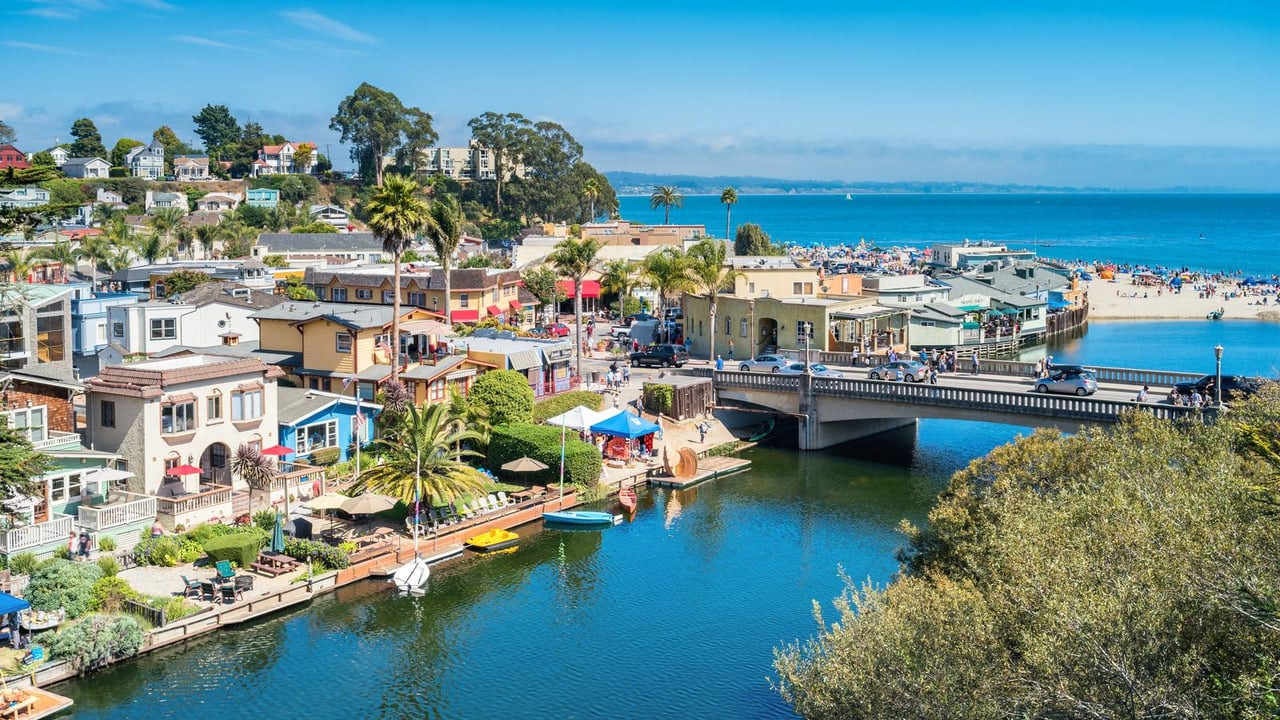
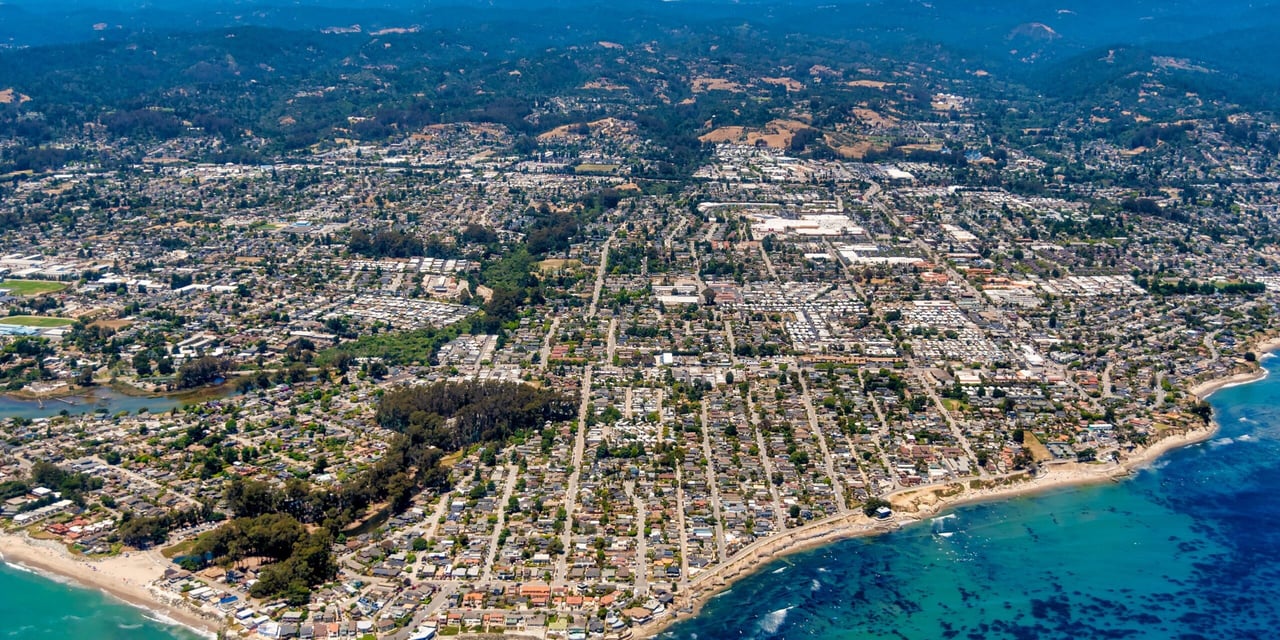
Buyers usually compare Scotts Valley to three places. Against Aptos, Scotts Valley trades ocean access and Cabrillo College proximity for a shorter commute over Highway 17 and a school district reputation the portals will not let us discuss here. Against Capitola, it trades a walkable beach village that already exists for a walkable downtown that is under construction. Against Boulder Creek, Ben Lomond, or Felton, it trades redwood privacy and lower prices for city services, sidewalks, and a shorter drive to San Jose.
The mid-$1.2M list price you see on the portals is buying you a specific bet: that Scotts Valley in 2030 looks meaningfully different from Scotts Valley in 2026, with a real downtown, a denser core along Mt. Hermon Road, and an amphitheater that draws Silicon Valley visitors over the hill on summer weekends. If you believe that bet, the current soft-to-flat pricing is an entry point. If you don't, the same price buys you more house in the San Lorenzo Valley or more coastline in mid-county.
The homes that hold value best through a civic transformation are usually the ones already inside the walking radius when the transformation completes, not the ones that get built after.
That rule of thumb, borrowed from watching Aptos Village and Capitola's 41st Avenue corridor evolve, is worth keeping in mind if you're looking at anything within a ten-minute walk of the Kings Village Shopping Center or the Skypark Drive corridor.
FAQ
Is the Town Center actually funded? The land is owned by the city, purchased for about $7.8 million on an eight-year financing plan with the City of Santa Cruz. The larger public infrastructure funding is expected to come through an Enhanced Infrastructure Financing District that the Council formally moved to create in late 2025, with formation work continuing through 2026. The developer selected in June 2026 will handle the vertical construction on a fee-simple basis.
What happens to Inversion Winery and Kissed by an Angel Winery? Both are working to relocate after the Pinnacle Pass property at 75 Mt. Hermon Road closed escrow and building permits were submitted for a 40-unit affordable apartment building. As of the mayor's April 2026 message, no replacement locations had been publicly announced.
How much of the new housing will be for-sale? Very little of the near-term pipeline. The Seagate, Beverly Gardens, and Pinnacle Pass projects are rental. The Town Center RFP allows the selected developer to determine unit mix, but the 25% affordability requirement and the state exceptions being used all point to rental-heavy delivery. Buyers looking for new-construction ownership product should look at attached homes in Aptos Village Phase 2 or wait for Town Center's for-sale component to be defined.
Should I wait to buy? That depends on whether you're buying a home or an investment. The trailing median is soft, days on market are longer than the peak years, and there is genuine room to negotiate on homes that have been sitting. Waiting for the Town Center to deliver is a five-plus year proposition. Waiting for interest rates is a different bet with a different timeline.
If you'd like a read on how a specific street or neighborhood inside Scotts Valley sits relative to the Town Center footprint, the AB2011 sites, and the current active inventory, Danny Ward is happy to walk it through with you. Let's Connect.